Selling a downtown Sarasota condo can feel simple at first. Then the real questions show up. How do you make a smaller space stand out online, what documents do buyers expect, and how do you prepare for a market where shoppers have options? If you want a smoother sale and a stronger first impression, a thoughtful pre-listing plan can make a real difference. Let’s dive in.
Understand today’s condo market
Downtown Sarasota condo sellers are stepping into a market that is active, but not especially tight. In Sarasota County, March 2026 condo and townhome closed sales rose 40.4% year over year to 455, while the median sale price increased 3.8% to $359,500. At the same time, inventory stood at 2,392 units and the median time to contract was 65 days.
That matters because buyers still have room to compare. RASM notes that 5.5 months of supply is a rough balanced-market benchmark, and the county was at 8.1 months of supply. In a downtown condo setting, where several units may offer similar layouts, views, and amenities, preparation is often what helps your listing stand apart.
The broader North Port-Sarasota-Bradenton market showed a similar pattern in April 2026. There were 752 condo sales, a median condo price of $325,000, and a 64-day median time to contract. In practical terms, you should expect buyers to study photos closely, compare monthly costs, and weigh building details before they move forward.
Make your condo look larger online
For many downtown Sarasota condos, your first showing happens on a screen. That is why visual preparation matters so much. According to NAR’s 2025 Profile of Home Staging, 49% of sellers’ agents said staging reduced time on market, and 29% said it increased offered price by 1% to 10%.
The same research found that the most common prep advice was to declutter or correct faults. Buyers’ agents also reported that photos, videos, and virtual tours play an important role. For a condo, the goal is usually straightforward: make the space feel brighter, cleaner, and easier to understand at a glance.
Focus on the rooms buyers notice first
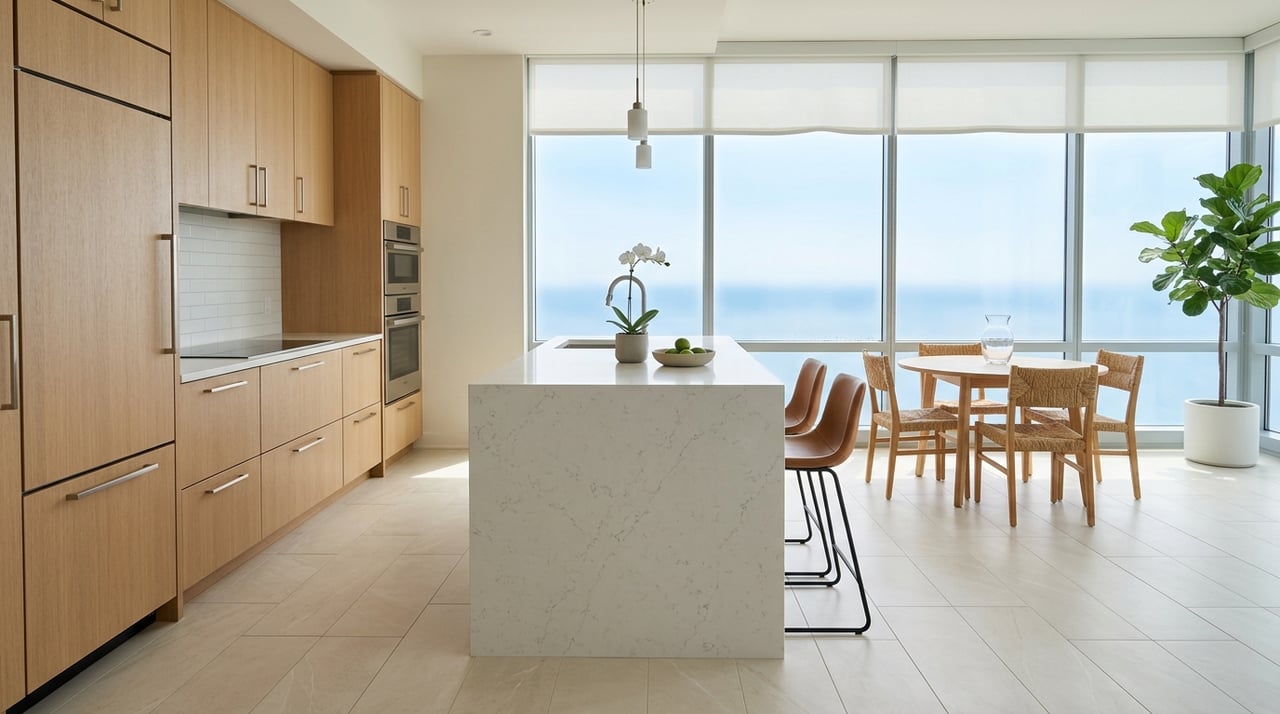
NAR’s staging findings highlight three spaces as especially important: the living room, primary bedroom, and kitchen. If you are deciding where to spend your time first, start there. These rooms tend to shape a buyer’s overall impression of the home.
In a downtown condo, that often means reducing visual noise. Remove extra chairs, side tables, and bulky decor that interrupt the flow. You want the eye to move easily through the room, not stop at clutter.
Declutter with scale in mind
Condo living works best when each room feels efficient and open. Clear kitchen and bathroom counters, simplify closet contents, and remove excess furniture that makes walkways feel tight. If you have a balcony, reduce storage items there too, especially if they distract from the usable outdoor space.
This is not about making the condo feel empty. It is about helping buyers understand the layout, the storage, and the livability of the space. In photos, even a well-furnished condo can look smaller than it feels in person, so editing matters.
Fix what shows in photos
Not every pre-sale improvement needs to be major. In fact, some of the most effective updates are small cosmetic fixes that improve how the condo reads on camera. Fresh paint touch-ups, working light bulbs, clean glass, polished hardware, and neat grout or caulk can make a space feel more cared for.
These details help increase brightness and reduce distractions. They also support a clean, polished presentation without overcomplicating your prep list. When buyers are comparing multiple downtown units online, small visual advantages can have an outsized effect.
Gather condo documents before you list
In Florida, condo resale preparation is not just about presentation. It is also about paperwork. Sellers are required to provide buyers with specific condo documents, and waiting until a contract is signed can slow down the process.
Florida’s condo resale disclosure rules require current copies of the declaration, articles of incorporation, bylaws and rules, the annual financial statement and annual budget, and the FAQ document. If applicable, sellers must also provide the milestone inspection summary, the most recent structural integrity reserve study, and the turnover inspection report.
Know what your contract must disclose
For contracts entered after December 31, 2024, the contract must also disclose whether a required milestone inspection, turnover inspection report, or structural integrity reserve study has been completed, or whether it is not required. These disclosures come with buyer voidability rights tied to the status of those items.
That means it is smart to know your building’s status before your condo hits the market. If a buyer asks on day one whether the building has completed a milestone inspection or SIRS, you do not want to be chasing answers after the showing.
Request records early
Florida law requires associations to maintain extensive official records. These can include governing documents, insurance policies, accounting records, meeting minutes, inspection reports, SIRS reports, permits, and the FAQ sheet. Unit owners can request access to official records, and the association must make them available within 10 working days after a written request.
Because timelines matter, it is wise to request key records early. If your association has 25 or more units, many important documents may also be posted digitally on the association website or app, which can make the process easier.
Be ready for buyer questions
In today’s market, condo buyers often ask more building-level questions than buyers of single-family homes. That is especially true in Florida, where reserve studies, milestone inspections, and association finances have become a central part of due diligence.
A prepared seller should expect questions about monthly costs, special assessments, building rules, and recent engineering or reserve work. Having clear answers can make your listing feel more credible and reduce uncertainty for serious buyers.
Financial questions come first
One of the most useful documents in a condo sale is the estoppel certificate. Under Florida law, the estoppel must list the regular periodic assessment, the next installment, any special assessments or other money owed, future scheduled assessments, capital contribution or transfer fees, open violations, whether board approval is required for transfer, whether there is a right of first refusal, and contact information for the association’s insurance.
Associations generally must issue the estoppel within 10 business days, and the fee is capped by statute. Even before you order it, you should have a working understanding of the items buyers are likely to review. Monthly dues alone rarely tell the full story.
Rules and use matter too
Buyers also want to know the rules that shape day-to-day ownership. Common questions involve pets, rentals, parking, storage, approval timelines, guest policies, and amenity access. These issues are usually addressed in the declaration, bylaws, rules, and other official records.
The more organized you are upfront, the easier it is for buyers to evaluate fit. That does not just help during due diligence. It can also improve the quality of the offers you receive.
Confirm showing access with the building
Downtown Sarasota condo sales involve more logistics than many sellers expect. Building access, front desk procedures, elevator use, lockbox rules, and notice requirements can all affect how easily buyers can tour your home.
Florida law gives condo associations broad recordkeeping duties and allows boards to adopt reasonable rules around access and inspections of records. Associations also have an irrevocable right of access to units during reasonable hours for maintenance or to prevent damage. Because each building may have its own showing procedures, it is smart to confirm the process with management before going live.
Avoid launch-day delays
If your photography is scheduled but elevator reservations are needed, or if your building requires advance notice for showings, last-minute confusion can weaken your debut. The same goes for concierge buildings or towers with controlled access. A smooth launch starts with building coordination.
This is especially important in a market where buyers are comparison shopping. If your listing goes live without a clear access plan, missed showings can quickly turn into missed opportunities.
Pay attention to reserves and inspections
Older downtown towers may be subject to milestone inspection and structural integrity reserve study requirements. Under Florida law and DBPR guidance, residential condo buildings that are three or more habitable stories must complete milestone inspections at 30 years and every 10 years thereafter, or 25 years in some local coastal circumstances.
Those same taller buildings must complete a SIRS at least every 10 years, with existing owner-controlled associations required to complete one by December 31, 2025, or by December 31, 2026 if completed with a required milestone inspection. These deadlines matter because buyers often ask whether the building is current and what that may mean for future costs.
For budgets adopted on or after December 31, 2024, associations that must obtain a SIRS may not waive or underfund the required reserves for covered structural items. Reserve funds generally must remain tied to authorized reserve purposes. For sellers, this helps explain why buyers may look closely at budget documents, reserve health, and any discussion of special assessments.
Use a smart pre-listing sequence
If you want to simplify the process, follow a clear order of operations before your condo hits the market.
- Pull the key condo documents first, including the declaration, bylaws, rules, budget, latest financials, FAQ, SIRS, milestone summary if applicable, and any special assessment notices.
- Ask management about showing access, notice requirements, and any building procedures before you schedule marketing.
- Declutter the condo to make it feel larger, then prioritize the living room, primary bedroom, and kitchen.
- Handle cosmetic fixes that show up in photos and video, such as lighting, touch-up paint, clean glass, tidy hardware, and crisp finishes.
- Schedule professional photography only after the condo is fully cleaned and access is confirmed.
- Price against comparable downtown Sarasota buildings, unit types, and amenity packages, not just countywide averages.
When you follow that sequence, you reduce surprises and present the condo with more confidence. In a market where buyers have choices, that kind of preparation can support better momentum from day one.
Selling a downtown Sarasota condo is part presentation, part pricing, and part process management. The sellers who stand out are usually the ones who prepare for all three. If you want a strategy that combines local condo insight, polished marketing, and hands-on guidance from start to finish, Fernando Viteri can help you position your home for a stronger sale.
FAQs
What documents do you need to sell a Downtown Sarasota condo?
- You generally need the declaration, articles of incorporation, bylaws and rules, annual financial statement, annual budget, FAQ document, and, if applicable, the milestone inspection summary, the most recent structural integrity reserve study, and the turnover inspection report.
What should you fix before selling a Downtown Sarasota condo?
- Focus on cosmetic items that improve photos and video, such as decluttering, touch-up paint, lighting, clean glass, polished hardware, and neat grout or caulk.
What buyer questions are common for Downtown Sarasota condos?
- Buyers often ask about monthly assessments, special assessments, reserve studies, milestone inspections, parking, storage, rental rules, pet rules, guest policies, and whether board approval is required.
How long does it take to sell a Sarasota County condo?
- In March 2026, the median time to contract for Sarasota County condo and townhome properties was 65 days, which suggests sellers should plan for buyer comparison shopping.
Why does condo staging matter in Downtown Sarasota?
- Staging matters because buyers often judge condos first through photos, videos, and virtual tours, and staging can help the space feel larger, brighter, and easier to understand online.